

Содержание страницы
Who Brokers Are, What They Do, and How to Choose a Reliable One
Successful investing begins with understanding the people and institutions that give you access to financial markets. Among them, brokers play a central role. They connect individual and institutional investors with markets, help execute trades, provide essential tools and information, and in many cases—offer guidance on building long-term investment strategies. In this article, we explore who brokers are, what functions they perform, the different types that exist today, and how to choose a trustworthy broker for your needs.
Who Is a Broker?
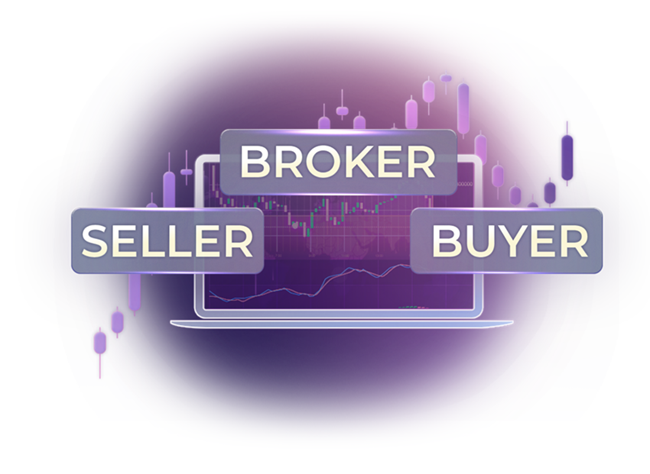
A broker is essentially a financial intermediary—a professional or a company that facilitates trading on behalf of clients. They provide access to markets where stocks, bonds, currencies, commodities, and other instruments are traded. Whether operating on major exchanges or in over-the-counter markets, brokers ensure that every trade is executed efficiently, securely, and in accordance with the client’s instructions.
At the core, the broker’s mission is simple yet crucial: to help clients carry out their trading activities in the most seamless and informed way possible, while also offering additional services that enhance their investment decision-making.
The Key Functions of a Broker
Modern brokers have evolved far beyond the traditional role of simply buying and selling assets. Today, they offer a broad ecosystem of services designed to support investors at every stage of their journey.
Their primary responsibility is trade execution: carrying out market and limit orders, processing buy and sell requests, and ensuring that transactions are completed at the best possible conditions. Yet many brokers go further by offering market insights and advisory services, helping clients interpret trends, evaluate financial instruments, and build investment strategies tailored to their goals.
Some brokers specialize in asset management—crafting and maintaining portfolios on behalf of clients who prefer a hands-off approach. Others provide robust digital platforms packed with analytical tools, charting capabilities, and real-time data feeds, empowering investors to make informed decisions independently.
Brokers also act as information hubs. From market news to detailed research reports, they supply clients with resources that can significantly influence investment outcomes.
Types of Brokers
The financial market offers a variety of broker types, each catering to different investor needs and trading styles.
Discount brokers focus on low-cost trade execution. They keep commissions minimal by limiting personalized services, making them a great fit for experienced investors who prefer independence.
Full-service brokers provide a more comprehensive experience. Their offerings include professional consultations, portfolio management, strategic investment planning, and a high level of personalized support. These services usually come with higher fees, justified by the broader range of benefits.
Margin brokers give clients the ability to trade using borrowed funds. This leverage can amplify profits, but it also raises the level of risk—something that requires careful consideration.
In recent years, crypto brokers have gained significant popularity. They offer platforms geared specifically toward buying, selling, and storing digital assets.
Finally, ECN brokers provide direct access to market liquidity through electronic communication networks, leading to tighter spreads, faster execution, and often more transparent trading conditions.
How to Choose a Reliable Broker
Selecting the right broker is one of the most important decisions an investor can make. It can influence trading efficiency, investment results, and overall security of funds.
The first and most essential factor is regulation. A broker licensed by respected authorities—such as the FCA in the UK, the SEC in the United States, or CySEC in Cyprus—must comply with stringent rules designed to protect clients’ interests.
It’s also important to understand the broker’s pricing structure. Commissions, spreads, withdrawal fees, and additional charges should be transparent and reasonable. Value matters more than simply the lowest cost: the services included in the fee can make a substantial difference.
The quality of the trading platform is another critical consideration. A modern interface, intuitive navigation, stability, fast execution speed, and a robust set of analytical tools can significantly improve the trading experience. Many investors also rely on mobile apps to stay active while on the go.
Customer support is often overlooked but becomes indispensable in moments when urgent assistance is needed. The best brokers maintain responsive, knowledgeable support teams accessible through multiple channels.
Educational resources—tutorials, webinars, market overviews—are also a valuable indicator of a broker’s commitment to the client. For beginners, such resources can be a major stepping stone toward building confidence and skill.
Finally, examining reviews and the broker’s reputation helps form a full picture. Feedback from other traders often reveals strengths and weaknesses that are not visible at first glance.
Conclusion
Brokers are indispensable participants in the financial ecosystem. They open the doors to markets, provide valuable tools and information, and support investors with a wide range of services. Understanding what brokers do, how they differ, and how to evaluate them makes the selection process far more informed and secure. A reliable broker can significantly improve your investment journey, helping you navigate the markets with confidence and clarity.
However, even the best broker cannot replace ongoing learning and active management. Successful investing requires staying aware of market trends, refining strategies, and continuously building financial knowledge.
 Lawyer Arthur Whitmore